
Home › Blog › Sri Lankan Black Pepper: Grades, Uses and Quality Checks for Buyers
Sri Lankan Black Pepper: Grades, Uses and Quality Checks for Buyers
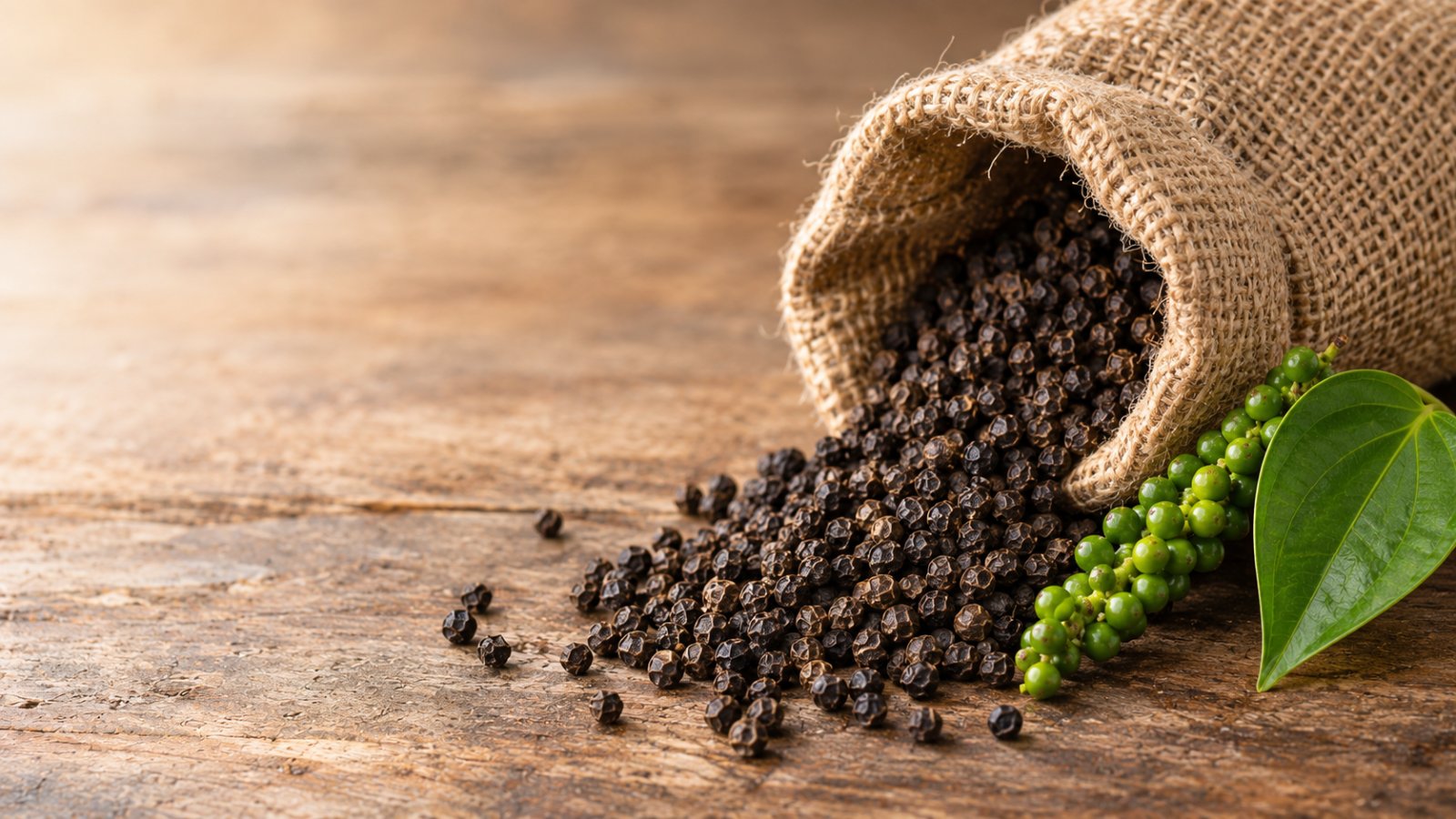
Black pepper is the world's most traded spice, and nearly every food maker buys it. Most of it comes from Vietnam, Brazil, Indonesia and India. Sri Lanka grows far less, but its pepper has a strong reputation for bold flavour and pungency. This guide is for importers, spice packers and food manufacturers: how Sri Lankan pepper is graded, what it is used for, and what to check before you buy in bulk.
The short answer: Sri Lankan black pepper is valued for its sharp heat and rich aroma. Like all pepper, it is traded mainly by bulk density (for example 550 g/L or 500 g/L), where heavier pepper means fuller, more mature berries. Buyers use it whole, cracked or ground in seasonings, meat products and retail packs, and as a raw material for oleoresin, oil and piperine extracts. Before buying, ask for a lot test covering moisture, density, microbiology and pesticide residues, and choose steam-treated pepper if your product needs low microbial counts.
Where is black pepper grown in Sri Lanka?
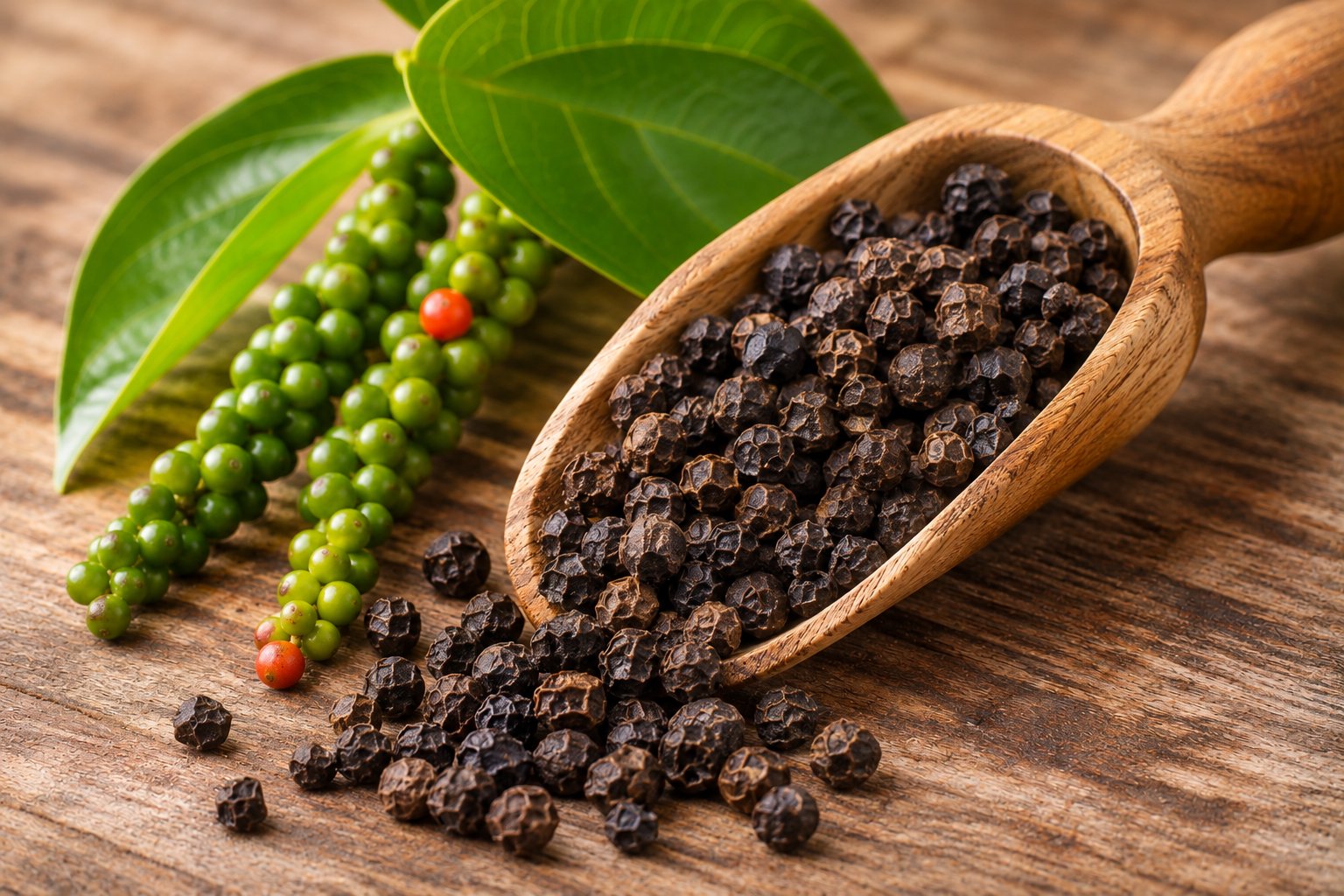
Black pepper (Piper nigrum) is a climbing vine. In Sri Lanka it grows mostly in the central and intermediate zones, in districts such as Matale, Kandy, Kegalle, Kurunegala and Badulla. Much of it comes from small farms and mixed home gardens, where pepper vines climb shade trees alongside cloves, nutmeg and cinnamon.
The green berries are picked when mature, then sun dried until they turn black and wrinkled. That drying step, and how well the berries are cleaned and graded afterwards, decides much of the final quality.
What makes Sri Lankan black pepper different?
- Strong flavour: Sri Lankan pepper is known for sharp pungency and a fresh, slightly citrusy, woody aroma. The heat comes mainly from piperine and the aroma from the pepper's essential oil.
- Extraction value: pungent pepper is sought after for oleoresin and piperine extraction.
- Smallholder origin: a good story for brands that value traceable, small-farm sourcing.
- One shipment, many spices: the same supply chain also gives white pepper, cloves, nutmeg and cinnamon, so buyers can consolidate orders.
Piperine and oil content vary by farm, season and drying, so ask for a test on the actual lot rather than relying on general claims about origin.
How is black pepper graded?
The main commercial measure is bulk density: the weight of one litre of peppercorns. Well-developed berries are heavy and dense. Light, hollow or immature berries lower the figure.
| Grade | What it means | Typical use |
|---|---|---|
| 550 g/L and above | Bold, well-filled berries with very few light ones | Retail grinders, whole pepper packs, premium seasonings |
| 500 g/L | Good commercial grade with a few more light berries | Grinding, seasonings, meat processing, food manufacturing |
| Below 500 g/L, light berries and pinheads | Immature or hollow berries removed during grading | Industrial grinding and extraction (oleoresin and oil) |
Bulk density is not the only measure. Buyers also check moisture (usually a maximum of around 12%), the share of light berries, extraneous matter such as stems, stones and dust, and volatile oil. ISO 959-1 defines classes and test methods for black pepper, and the European Spice Association and the American Spice Trade Association publish quality guidelines that many contracts refer to. Your contract should state the exact limits.
What is black pepper used for?
Seasonings and spice blends
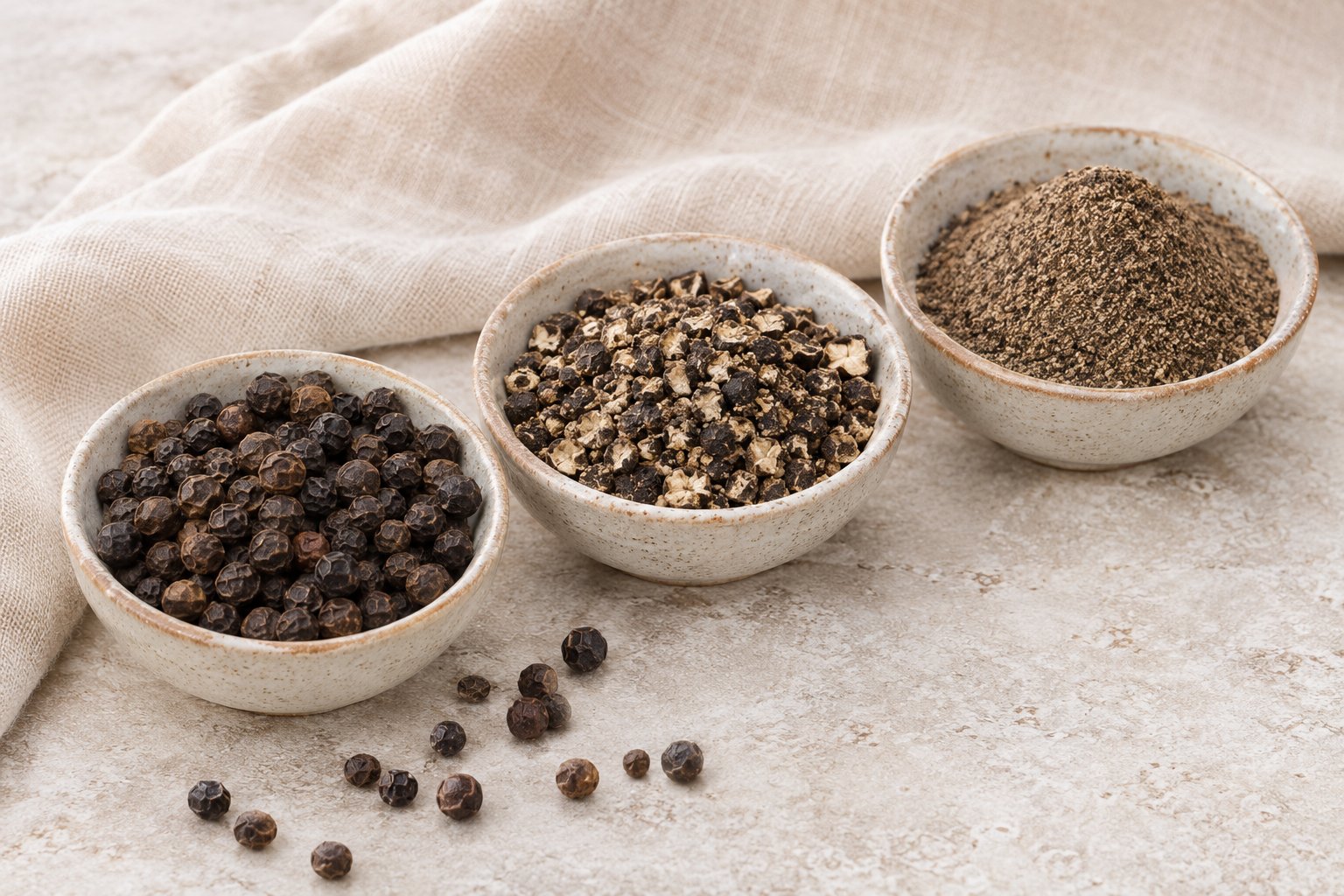
Ground or cracked pepper is the base of countless seasonings: steak and barbecue rubs, snack seasonings, soups, sauces and ready meals. A consistent mesh size and pungency keep the final product the same from batch to batch.
Meat processing
Sausages, salami, burgers and cured meats use whole, cracked and ground pepper. Meat processors usually need low microbial counts, so they often ask for steam-treated pepper.
Retail and grinder packs
Whole 550 g/L pepper is a good fit for grinders and jars, where shoppers see the berries. Clean, even, dark berries matter here.
Extraction: oleoresin, oil and piperine
Extractors turn pepper into pepper oleoresin (the full flavour and heat in concentrated form), pepper essential oil (aroma) and piperine extracts. Food makers use oleoresin for consistent flavour without specks. Supplement makers use piperine extracts in some formulations. If you sell supplements, check which claims are allowed in your market; the EU, for example, has no authorised health claims for black pepper.
What is the difference between black and white pepper?
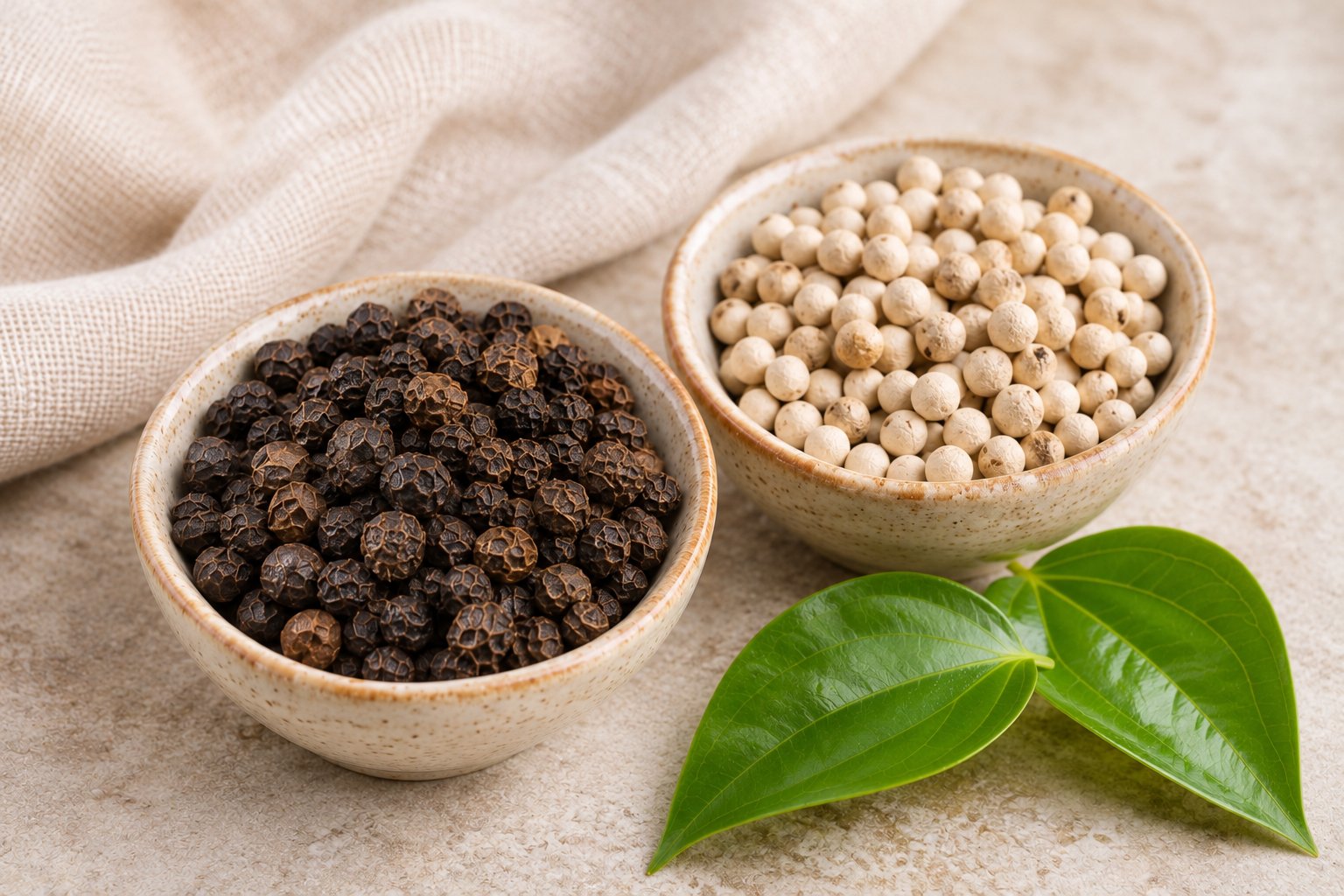
Both come from the same plant, Piper nigrum. Black pepper is the whole berry, picked green and sun dried until the skin turns black and wrinkled. White pepper is made from riper berries that are soaked and skinned before drying, leaving the pale inner seed. White pepper has a cleaner, milder heat and no dark specks, so food makers use it in light sauces, white soups, mashed potato and pale seasonings. Many buyers order black and white pepper together.
What do EU and US buyers check in black pepper?
Pepper is a raw agricultural product dried in the open air, and it is one of the spices most often stopped at EU and US borders. The common reasons are:
- Salmonella: the most frequent cause of rejections. Buyers also check total plate count, yeasts and moulds, and E. coli.
- Pesticide residues: results must stay within EU maximum residue levels for the destination market.
- Ethylene oxide: not allowed as a treatment in the EU. Ask how the pepper was sterilised.
- Mould and mycotoxins: poor drying or damp storage can lead to mould, aflatoxin and ochratoxin A. Moisture should be low and stable.
- Adulteration: dried papaya seeds look similar to peppercorns and have been used to bulk out pepper. Density, a visual check and lab tests help detect it.
Should you buy steam-treated black pepper?
For most food uses in the EU and US, yes. Steam treatment lowers bacteria such as Salmonella without chemicals, and the berries keep most of their flavour when it is done well. It also needs no special labelling. Irradiation is permitted for spices in the EU but must be labelled, so many buyers avoid it.
Ready-to-eat products, such as table pepper, seasonings sprinkled after cooking and snack coatings, need low microbial counts. If you will cook or further treat the pepper yourself, untreated pepper may be fine, but check your own food safety plan.
What should you ask a black pepper supplier?
- Origin and grade: country, growing region and bulk density (for example 550 g/L).
- Lot test report (CoA): moisture, density, light berries, extraneous matter, volatile oil, and piperine if pungency matters to you.
- Microbiology: including Salmonella, and whether the lot is steam treated.
- Residues and contaminants: pesticides against EU limits, aflatoxin and ochratoxin A for your market.
- Sterilisation method: confirmation that no ethylene oxide was used.
- Form and mesh: whole, cracked or ground, and the mesh size for ground pepper.
- Packing: clean, food-grade 25 or 50 kg bags with lot numbers on every bag, and container loading.
- Samples and trial order: test the grade in your own grinder or recipe first.
Sheora Ceylon supplies Sri Lankan black and white pepper in bulk, in 550 g/L and 500 g/L grades, with a test report for every lot and trial orders from 25 kg. Steam-treated pepper is available on request. Request samples or ask for a quote.
Sources
- ISO 959-1: Pepper (Piper nigrum L.), whole or ground (ISO)
- European Spice Association (quality guidelines for spices)
- American Spice Trade Association (cleanliness specifications)
- EU RASFF Window (border rejections and alerts for food)
- Directive 1999/3/EC: EU list of foods that may be treated with ionising radiation, including spices (EUR-Lex)
- Sri Lanka Export Development Board: spices
This article is general guidance for buyers and product developers. Exact specifications should be agreed in your contract and confirmed by lot test results.
Sourcing Sri Lankan herbs for your brand?
Sheora Ceylon supplies herbal teas, herbal powders and Ceylon spices from Sri Lanka in bulk, white label and private label. Samples and certificates of analysis are available on request.
Send an inquiryThis article is for general information only and is not medical advice. Talk to a qualified health professional before using herbs or herbal products to manage a health condition, especially if you are pregnant, have a medical condition or take medication.