
Home › Blog › Cinnamon Oil for Soap Making: Leaf vs Bark, Trace, Colour and Labelling
Cinnamon Oil for Soap Making: Leaf vs Bark, Trace, Colour and Labelling
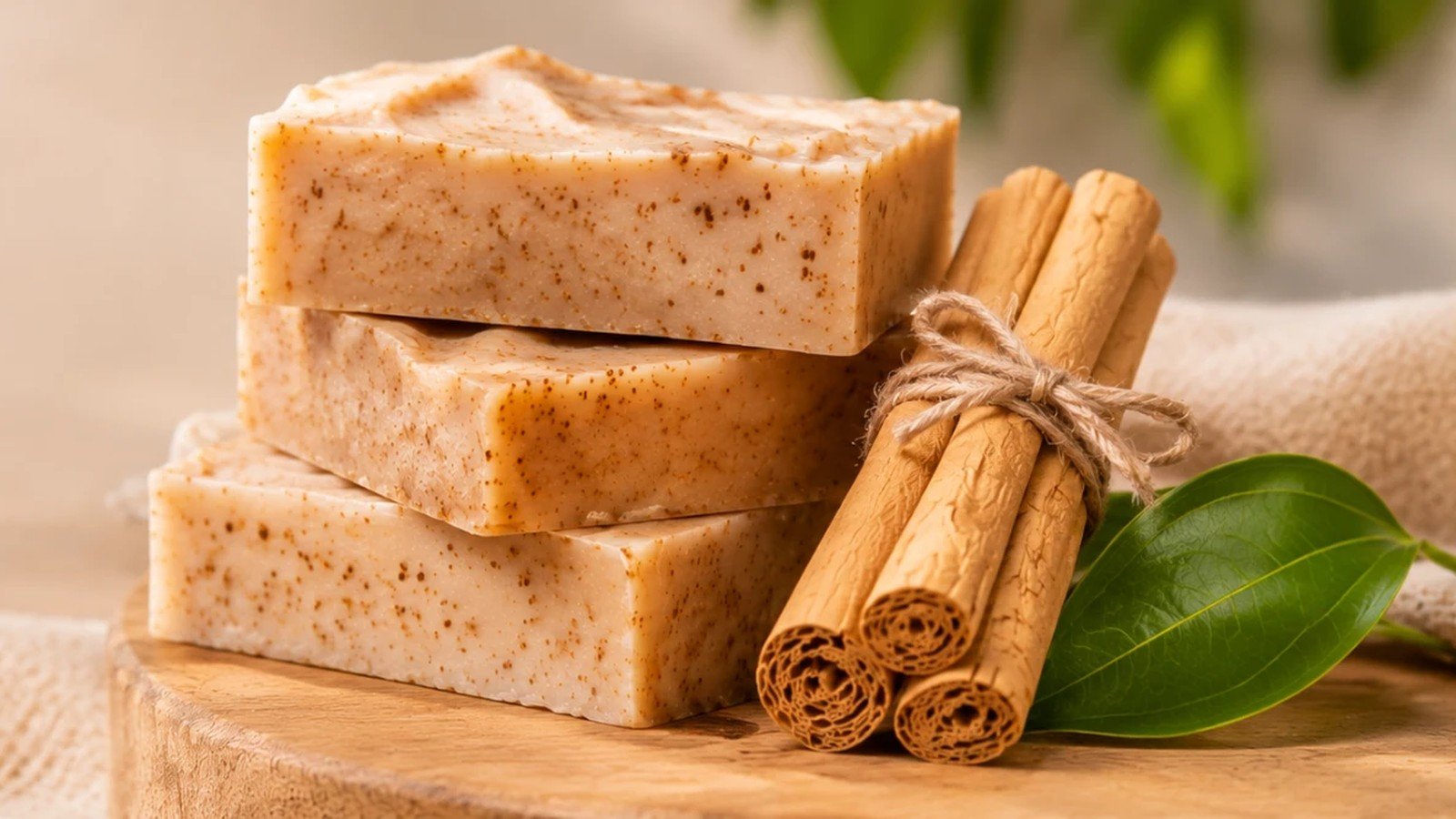
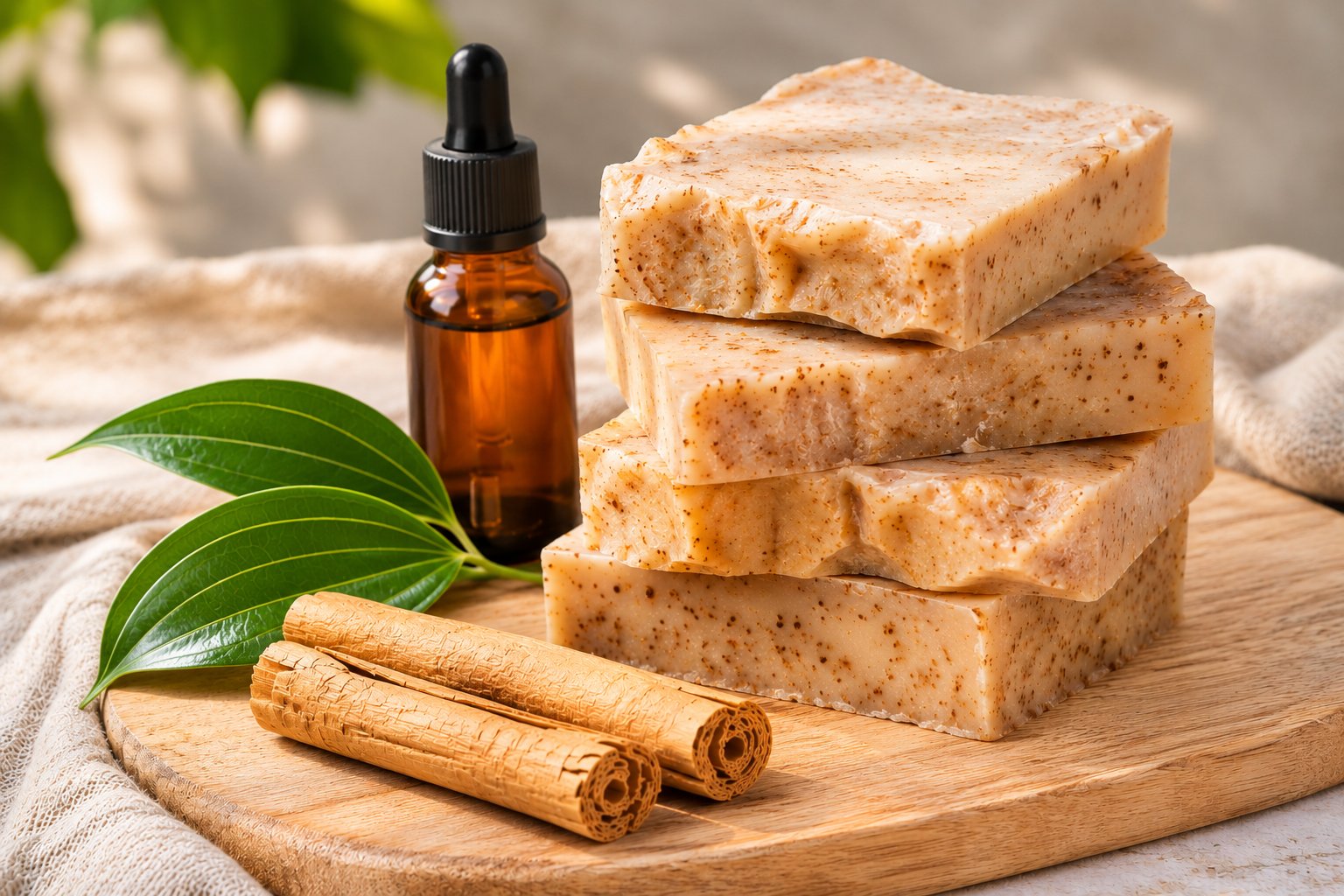
Cinnamon is one of the most popular scents in handmade soap, especially for autumn and winter ranges. It is also one of the trickiest. The oil you choose, how much you use and how you label it all matter. This guide is for soap and cosmetic makers buying cinnamon oil or powder in bulk.
The short answer: Most soap makers use cinnamon leaf oil, not cinnamon bark oil. Leaf oil is rich in eugenol and gives a warm, spicy scent. Bark oil is rich in cinnamaldehyde, a strong skin sensitiser, so its use in skin products is tightly restricted. Whichever you use, stay within IFRA limits, test for fast trace and colour change, and list the fragrance allergens on your label.
What is the difference between cinnamon leaf oil and cinnamon bark oil?
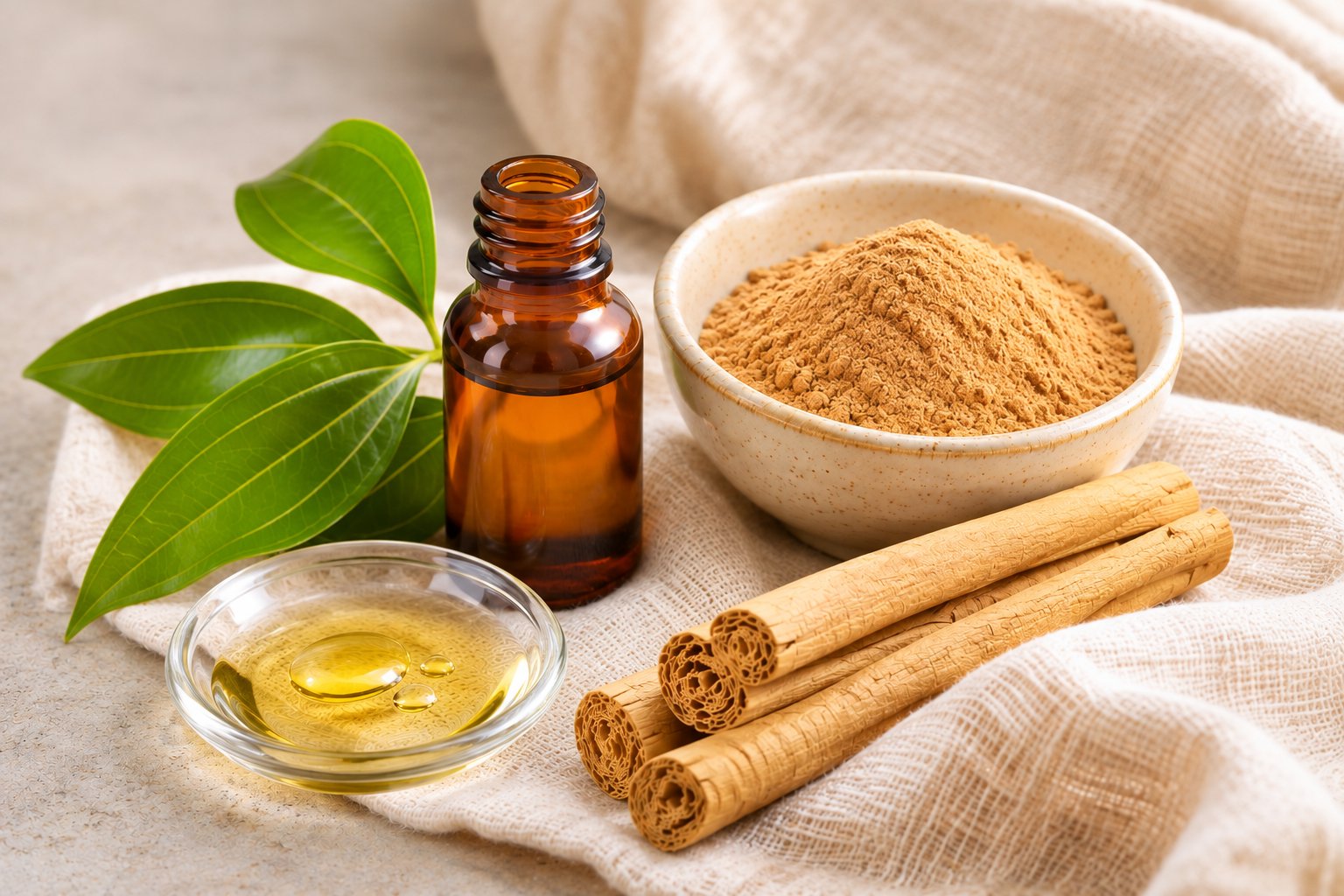
Both come from the Ceylon cinnamon tree, Cinnamomum verum, and are made by steam distillation in Sri Lanka. They come from different parts of the tree and behave very differently in soap.
| Cinnamon leaf oil | Cinnamon bark oil | |
|---|---|---|
| Made from | Leaves and twigs | Inner bark |
| Main compound | Eugenol (typically 75 to 85%) | Cinnamaldehyde (cinnamal) |
| Scent | Warm, spicy, clove-like | Sweet, rich, classic "cinnamon" |
| Skin products | Used in soap at low levels, within IFRA limits | Strong skin sensitiser; very limited use in skin products |
| Price | Affordable | Premium |
For soap, leaf oil is the practical choice. Bark oil is better kept for food flavours and fine fragrance, where formulators can work within its tight limits.
Is cinnamon oil safe to use in soap?
It can be, if you use it correctly. Eugenol and cinnamal are both known fragrance allergens. The International Fragrance Association (IFRA) sets maximum levels for them in each product type, and rinse-off soap has its own category. Ask your supplier for an IFRA certificate for the exact oil and lot, and use it to work out your maximum usage rate. Do not rely on usage rates copied from forums or old recipes, because IFRA limits are updated over time.
In the EU and UK, cosmetic products also need a safety assessment before they go on sale. Your safety assessor will want the oil's IFRA certificate, safety data sheet and allergen declaration.
Why does cinnamon oil make soap trace so fast?
Eugenol-rich oils, such as cinnamon leaf and clove, are well known for accelerating trace in cold process soap. The batter can thicken quickly and, in the worst case, seize in the pot. To stay in control:
- Make a small test batch before a full run.
- Soap at cooler temperatures and add the oil at light trace.
- Mix by hand with a spatula after adding the oil, rather than with a stick blender.
- Keep the design simple, or blend cinnamon leaf with slower-moving oils such as orange.
Melt and pour soap does not have this problem, which makes it an easy way to start.
Will cinnamon oil change the colour of my soap?
Usually, yes. Eugenol tends to turn soap tan to brown over a few weeks. Plan for it: use cinnamon in naturally brown or warm-coloured designs, or embrace the colour change as part of the look. A test bar kept for four to six weeks shows you the final shade.
Can you use ground cinnamon in soap?
Yes, as a natural colourant. Ground Ceylon cinnamon gives warm brown speckles. A few points:
- Use a small amount. Too much feels scratchy and can bother sensitive skin.
- For an even colour without speckles, infuse the powder in a liquid oil, then strain it before use.
- Powder adds colour, not much scent. Use leaf oil for fragrance.
- Choose a fine, steam-sterilised powder with a low microbial count for cosmetic use.
How do you label a soap made with cinnamon oil?
In the EU, the Cosmetics Regulation requires certain fragrance allergens to be listed by name in the ingredients when they are above 0.01% in a rinse-off product such as soap. Cinnamon leaf oil contains eugenol and can contain other listed allergens, such as linalool and benzyl benzoate. Cinnamon bark oil contains cinnamal.
The EU expanded its list of fragrance allergens that must be labelled in 2023, with transition periods for existing products. Ask your supplier for an allergen declaration covering the current list, so your labels stay accurate. Rules in the UK, US and other markets differ, so check the market you sell into.
Keep your product claims about scent, feel and appearance. Claims such as "antibacterial" or "heals skin" are medicinal claims and are not allowed for ordinary cosmetics.
What should you ask a cinnamon oil supplier?
- Botanical source and part: Cinnamomum verum, leaf or bark, and country of origin.
- GC report for the lot: shows the eugenol or cinnamaldehyde content and confirms the oil is not adulterated.
- IFRA certificate: maximum use levels by product category.
- Allergen declaration: against the current EU list.
- Safety data sheet (SDS): hazards, handling and transport information.
- Packaging and storage: lined steel drums or aluminium containers, minimal headspace, stored cool and away from light.
- Trial quantity: a small lot to test in your own recipe before a bulk order.
Sheora Ceylon supplies Ceylon cinnamon leaf oil and bark oil in bulk from Sri Lanka, with a GC report for every lot and trial orders from 1 kg. We also supply fine, steam-sterilised Ceylon cinnamon powder. Request samples to test in your own recipes.
Sources
- Regulation (EC) No 1223/2009 on cosmetic products (EUR-Lex)
- Commission Regulation (EU) 2023/1545 on labelling of fragrance allergens (EUR-Lex)
- IFRA Standards (International Fragrance Association)
This article is general guidance for product developers. It is not legal or safety advice; always have your formula checked by a qualified safety assessor.
Sourcing Sri Lankan herbs for your brand?
Sheora Ceylon supplies herbal teas, herbal powders and Ceylon spices from Sri Lanka in bulk, white label and private label. Samples and certificates of analysis are available on request.
Send an inquiryThis article is for general information only and is not medical advice. Talk to a qualified health professional before using herbs or herbal products to manage a health condition, especially if you are pregnant, have a medical condition or take medication.